Pound for pound, no animal wrecks a Pennsylvania attic faster than a raccoon. Those clever paws that open trash cans will peel back a soffit panel like a sardine lid, and a mother denning above your ceiling can flatten insulation, strip ductwork, and establish a latrine in a single season. Montgomery Wildlife handles the whole arc of the problem: humane trapping, baby-safe removal during denning season, reconstruction of what got torn open, exclusion of the entire structure, and professional cleanup of what they left behind — all under our written 10-year guarantee.
"They trapped four raccoons and a squirrel, repaired all of the damage and guaranteed their work."
— Elsie Thomas, Ambler, PA
How We Work
Our Raccoon Removal Process
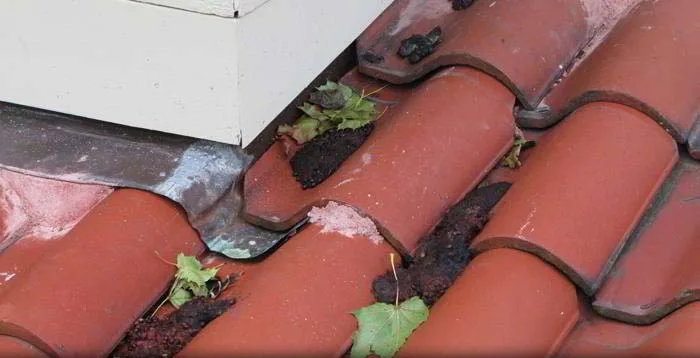
1. Find the story before setting a trap. Every job starts in the attic and on the roof: soffits, fascia, roof vents, chimney crowns, and crawlspace doors. We're establishing three things — where they're entering, how many are inside, and whether there's a litter. From March into early summer, we assume babies until we've proven otherwise.
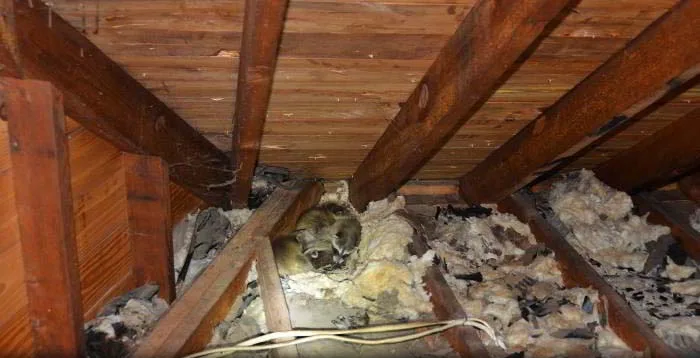
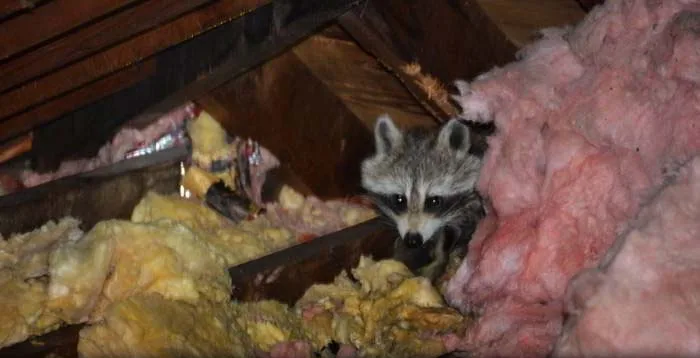
2. Babies come out first, by hand. This is the step that separates wildlife professionals from trap-setters. Catch the mother while her kits are stashed in the insulation and you've orphaned a litter inside your home — they won't survive, and you'll smell the consequence for weeks. Our technicians locate the den and lift the kits out by hand before the mother is ever trapped, and the family is kept together.
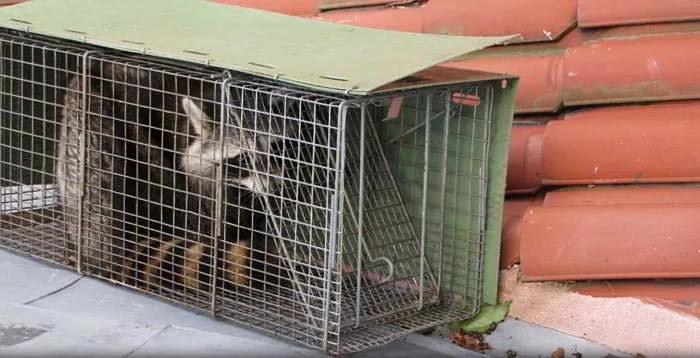
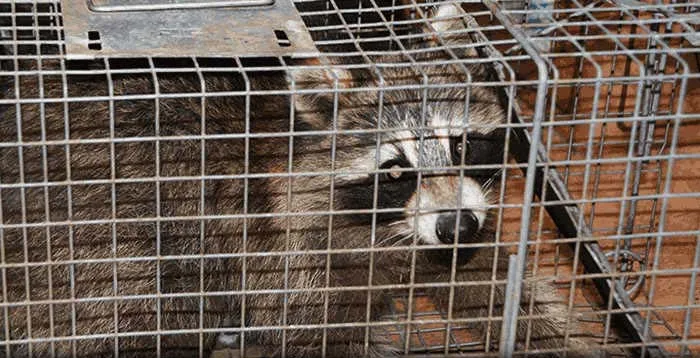
3. Humane trapping. Adults are captured in professional cage traps positioned on the entry routes they're already using, checked promptly, and handled in accordance with Pennsylvania Game Commission regulations for the species.
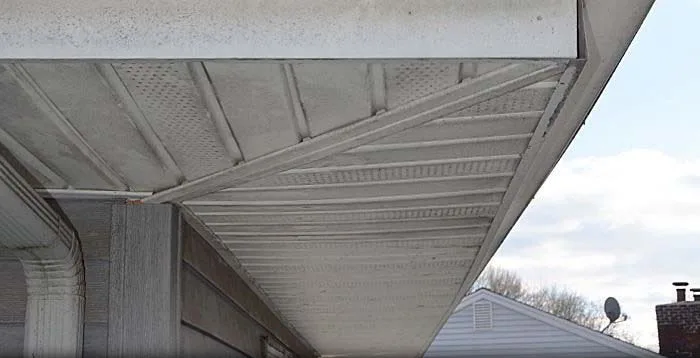
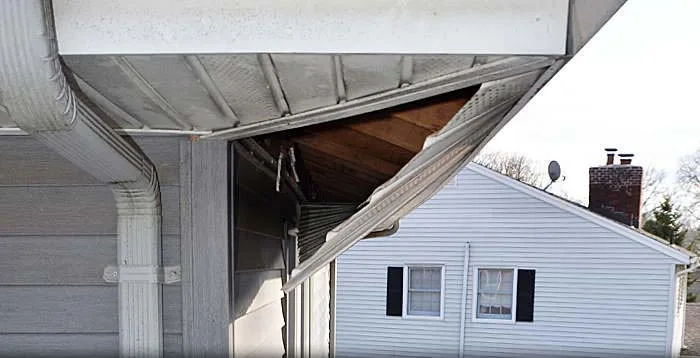
4. Rebuild stronger than original. Raccoons exploit weak construction, so the repair has to out-muscle the animal. Torn soffits, crushed vents, and pried fascia are rebuilt with heavy-gauge materials a raccoon can't tear back open — then finished so the repair vanishes into the house. If the attic needs decontamination, we scope and document it on the spot.
Our Raccoon Work
Photos from Recent Jobs
Humane Cage Trapping
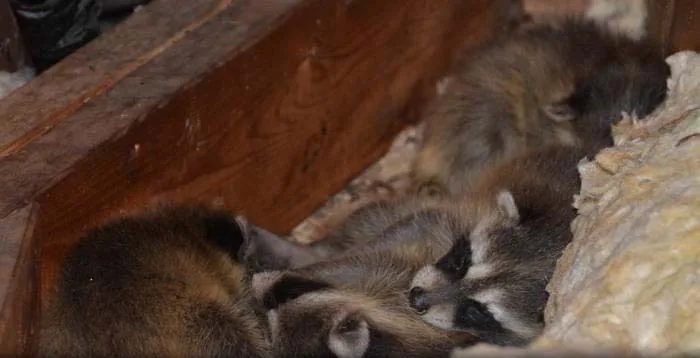
Kits In The Attic
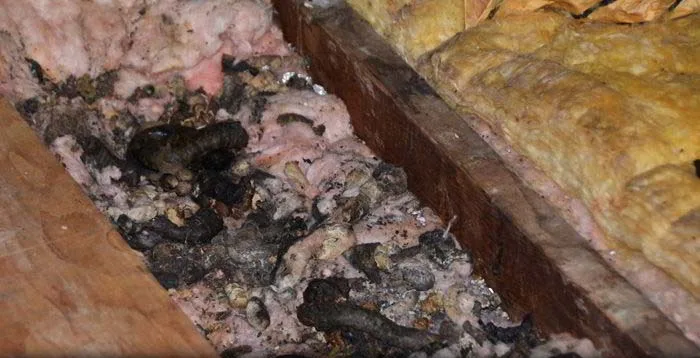
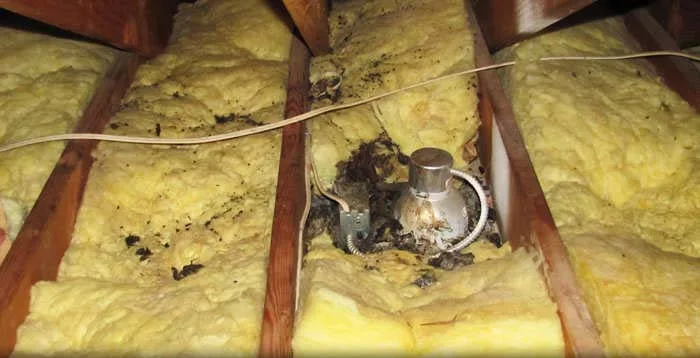
Attic Damage & Latrine
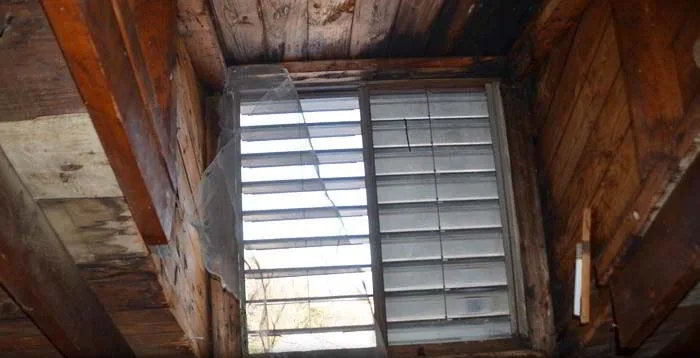
Rebuilt Soffit
Case Study: Delaware County
A Havertown family heard what sounded like a bowling ball rolling across their ceiling every night around 2AM. Our inspection found the answer in the back corner of the attic: a mother raccoon and four kits denned in the insulation, having entered through an aluminum soffit she'd folded open at the seam. We lifted the kits out by hand, trapped the mother at her own entry point within a day, and released the family together. The soffit run was rebuilt with reinforced backing she couldn't have folded, and the den corner — feces, flattened insulation and all — was professionally cleaned, treated, and re-insulated. Total time from first call to final seal: six days.
Know Your Raccoons
Biology & Behavior
The raccoon (Procyon lotor) might be the most capable burglar in North American wildlife. Adults run 15 to 40 pounds, with front paws nearly as dexterous as hands — they can rotate, pry, grip, and pull apart building materials that defeat every other animal on this site. In southeastern Pennsylvania they thrive everywhere from Chester County woodlots to the rowhome blocks of Philadelphia, where uncapped chimneys and accessible trash keep populations dense.
They're nocturnal, which is why the soundtrack — heavy thumping, deliberate footsteps, chittering — runs from dusk to dawn. A raccoon is too heavy to mistake for a squirrel; if it sounds like something walking up there, it probably is. They also reuse the same doorway religiously, leaving smudged, greasy staining around the opening that our inspectors can spot from the ground.
Denning season runs roughly March through June. A pregnant female wants exactly what your attic offers — warm, dry, elevated, predator-free — and litters of three to five kits are typical. The kits can't move on their own for about their first two months, which is precisely why the hand-removal step exists.
Common Health Risks
Rabies, Roundworm & a Wrecked Attic
Rabies. Raccoons are one of Pennsylvania's primary rabies vector species. Keep your distance from any raccoon, full stop — and treat one that's stumbling, disoriented, or strangely fearless as a genuine emergency. That said, a raccoon out in daylight isn't automatically sick: nursing mothers forage around the clock to keep up with their litters. Distance is the rule either way; rabies sometimes presents as unusual friendliness rather than aggression.
Raccoon roundworm. Raccoon feces can carry the eggs of Baylisascaris procyonis, a parasite whose larvae can migrate to the brain, eyes, and organs if eggs are accidentally ingested — children are at particular risk. The eggs become infectious within a few weeks of being deposited and can stay viable in the environment for years. This single organism is the reason raccoon latrine cleanup is professional work. Don't sweep it, don't shop-vac it, don't touch it.
The damage bill. Even a healthy raccoon is expensive. They compress and soil insulation (gutting its R-value), strip the wrap off HVAC ducts, gnaw wiring, and punch entry holes that let rain follow them in — so the raccoon problem becomes a mold problem. A family in the attic for one season routinely produces a four-figure repair scope.
Seasonal Patterns
Denning Season: March Through June
Spring is raccoon season on our phones. By the time most homeowners investigate the noise, the litter has already arrived — which means every spring job is really two jobs: the mother and the kits. The catastrophic mistake, made constantly by pest control generalists, is trapping or evicting the mother solo. Orphaned kits die slowly in the insulation, and a desperate mother locked outside will shred a roof to get back to them. We've repaired the holes that prove it.
Our standing rule: nobody sets a trap until the litter question is answered. Kits found, kits hand-removed, family kept together, structure sealed behind them. Humane and effective aren't competing goals here — they're the same procedure.
After the Raccoons Are Gone
Latrine Cleanup & Attic Decontamination
Raccoons concentrate their waste in shared latrines, so what's waiting in the attic corner isn't scattered droppings — it's an accumulation, loaded with the roundworm risk described above. Decontamination means containing the space, removing contaminated insulation in sealed bags, HEPA-vacuuming, applying antimicrobial treatment, and re-insulating, with technicians in full protective equipment throughout.
Here's the good news: raccoon damage is one of the more commonly covered wildlife claims on homeowners policies. We photograph everything from first inspection to final repair, produce documentation your adjuster can actually use, and work the claim with you. Details on our Attic & Crawlspace Cleaning page.
What Customers Say
Raccoon Removal Reviews
"Montgomery Wildlife did a great job getting rid of the raccoons from our attic. They took our call even though it was late and put our minds at ease for the night. The next morning, they inspected our attic and set traps. They trapped four raccoons and a squirrel, repaired all of the damage and guaranteed their work. We were really pleased and would gladly recommend them."
Elsie Thomas
Ambler, PA · Montgomery County
"We could hear something heavy moving over our bedroom every night. Thomas found a mother raccoon with babies in the attic, got every one of them out safely, and rebuilt the soffit so well you can't tell where she got in. Worth every penny."
Placeholder review
Delaware County · pending real GBP review
Common Questions
Raccoon Removal FAQ
Inspection first, then a written, itemized quote. The number moves with headcount, whether kits are involved, how much structure needs rebuilding, and whether the attic needs decontamination. Raccoon jobs vary too much for one-size pricing — anyone who quotes you sight-unseen is guessing.
Call us and stop there — don't seal anything, don't set a store-bought trap. We'll hand-remove the kits, trap the mother, and keep the family together. Separating them is how a noise problem becomes an odor-and-demolition problem.
We'd strongly advise against it. Raccoons are a rabies vector species in Pennsylvania and their handling and relocation are regulated by the Game Commission — beyond the legal exposure, a cornered 30-pound raccoon defending kits is not an animal to learn on. Licensed professionals exist for exactly this job.
Not necessarily — nursing females forage by day, and displaced animals wander at odd hours. But disorientation, staggering, or zero fear of humans are red flags. Either way the protocol is identical: keep people and pets away and call a professional.
Yes — treat it as hazardous. Raccoon droppings (dark, tubular, often seedy, usually piled in one repeated spot) can carry roundworm eggs capable of causing severe neurological injury if ingested. It's one of the few wildlife messes where DIY cleanup is genuinely risky.
All the time; an uncapped flue reads as a hollow tree to a denning female. We remove the animal (and any kits on the smoke shelf), then install a heavy stainless cap and secure the flashing so the chimney is permanently off the menu.