Bird Stuck In a Vent or Loose In the House? We Can Help
Family Owned & Operated
Licensed & Insured
Free Estimates
Federally Compliant Methods
PA Game Commission Licensed
A bird problem rarely announces itself as one. It's the dryer that suddenly needs two cycles, the chirping behind the shutters at 5 a.m., the streaks appearing down the brick, the flutter in the bathroom fan. Montgomery Wildlife handles all of it across our five counties: extracting birds and nests from dryer and exhaust vents, capping chimneys, clearing and sealing shutters and soffits, and installing netting and deterrent systems on commercial buildings. Most birds in Pennsylvania are protected under federal and state law — it's illegal to harm them or disturb their active nests without permits — so everything we do is non-lethal, humane, and built around the legal calendar. Exclusion work carries our written 10-year guarantee.
Bird loose in the house or stuck in a vent right now? Call (267) 647-6674 — trapped-animal calls move to the front of the line.
"Thom and his crew cleared out countless birds nests from behind our shutters and sealed them up beautifully so that they will never come back."
— Robert Bauscher
How We Work
Our Bird Removal Process
1. Identify before anything else. Bird work starts with a question other animals don't raise: what species is this? The answer decides what's legal. Starlings, house sparrows, and pigeons — all introduced species — aren't protected and can be handled any time of year. Nearly everything else with feathers is covered by federal and Pennsylvania law, which means the plan has to respect active nests and nesting season. We inspect, identify, locate every nest site, and map the approach from there.
2. Extract and clear. For vent nests, we remove the birds and every scrap of nesting material, then clean the duct so it actually exhausts again. Chimney situations get the bird out (when it's reachable) and the flue inspected. Shutter and soffit nests are cleared completely — half-removed nests just get rebuilt, usually with the mites still in residence.
3. Close the door permanently. This is the half of the job most companies skip. Cleared vents get fitted covers that pass air but not beaks; chimneys get stainless caps; shutters and soffit gaps get sealed with materials cut to fit and finished to match — work our carpentry background makes invisible from the curb. For pigeon pressure on commercial buildings, we design netting, spike, and deterrent systems matched to the structure. Protected-species jobs get scheduled around the nesting window so the fix is both permanent and legal.
Our Bird Work
Photos from Recent Jobs
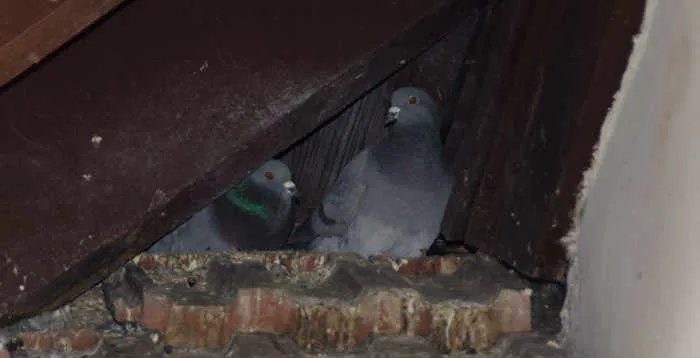
Shutter Nests (Before)
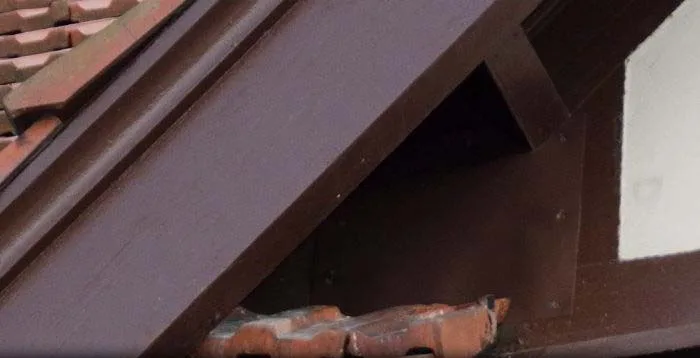
Sealed (After)
Dryer Vent Nest Extraction
Stainless Chimney Cap
Case Study: Philadelphia County
A Roxborough rowhome owner called because the dryer had gone from one cycle to three and the laundry room smelled faintly of something burning. The vent run exited through the side wall — and the louver flap had been propped open for years by a starling nest packed solid with twigs, feathers, and compacted lint. That combination is a fire waiting for a spark. We extracted two adults, removed a nest the size of a basketball, brushed and vacuumed the full duct run, and installed a guard that keeps the airflow and loses the tenants. The dryer went back to one cycle the same afternoon.
Common Species
The Birds Behind Most of Our Calls
European starlings are the vent specialists — aggressive, relentless, and unprotected. Give them a dryer vent, bathroom exhaust, or range hood with a loose flap and they'll fill the duct end to end with nesting material. They're behind most of the fire-hazard calls we run.
House sparrows prefer the architecture: gaps in soffits, the voids behind shutters, signage and facade cavities. Also unprotected. Their nests are reliable mite factories, and on the Main Line's stone colonials, the space behind a fixed shutter might as well be a birdhouse with a mortgage.
Pigeons own the ledges — rooflines, cornices, parking structures, warehouse beams. Their droppings are genuinely acidic and eat into paint, metal, and the brick and brownstone this region is built from. Pigeon work is the bulk of our commercial bird business, especially in Philadelphia.
Chimney swifts are the spring chirpers in uncapped flues, and they're federally protected — their nests can't be touched while active, roughly May through August. The fix is patience: the birds leave in early fall, and the cap goes on behind them.
House finches build in vents, porch lights, and wreaths, and they're protected under the Migratory Bird Treaty Act. Active nests with eggs or young stay put until they fledge; then we exclude.
Woodpeckers don't move in — they remodel, drilling siding, fascia, and trim. Also federally protected, so the answer is repair plus layered deterrents rather than removal.
Health Risks
Dryer Fires, Bird Mites & What's in the Droppings
The fire hazard is real, not theoretical. A nest in a dryer vent traps heat and lint behind dry tinder — a textbook ignition recipe, and fire officials attribute thousands of house fires a year to blocked dryer exhausts. If drying times have crept up or the laundry room runs hot, the vent needs eyes on it now, not eventually.
Bird mites are the surprise nobody sees coming. These near-microscopic parasites live in nests and feed on the birds — until the birds fledge or die, at which point the colony goes hunting for a replacement host through the nearest vent or gap. The result is unexplained bites and itching that no amount of house cleaning fixes, because the source is a nest you didn't know you had. Removing the nest and treating the cavity is the only cure.
Droppings are a respiratory issue, not just a cosmetic one. Accumulated bird droppings can harbor the organisms behind histoplasmosis and cryptococcosis, and disturbing a dried buildup sends spores airborne. Significant accumulations — under a long-standing roost, in an attic, behind a facade — call for proper protective equipment and containment, the same standard we apply to bat guano.
Legal Compliance
The Legal Side: Why Species ID Comes First
Most birds native to Pennsylvania are protected under the federal Migratory Bird Treaty Act and state law — and the protection has teeth. Removing, relocating, or destroying an active nest of a protected species without a permit is illegal, and the fines are not symbolic. This is why bird work that starts with a ladder instead of an identification is a liability, and why our process never does.
The three exceptions are the introduced species: European starlings, house sparrows, and pigeons, which can be removed year-round. For everyone else, we work the calendar — exclusions and caps installed after young have fledged, typically early fall for chimney swifts — so the problem ends without the law being bent.
What Customers Say
Bird Removal Reviews
"Thom and his crew were true professionals and helped us clear out countless birds nests from behind our shutters and sealed them up beautifully so that they will never come back. I highly recommend Tom to anyone dealing with a similar issue; you will be glad you called him!"
Robert Bauscher
Southeastern Pennsylvania
Common Questions
Bird Removal FAQ
We'd hold off. If the builder is a protected species with eggs or young inside, removing it is illegal; if it's a sparrow nest, yanking it bare-handed is a good way to meet the mites and to guarantee a rebuild, since the cavity is still wide open. The lasting fix is clearing every nest, treating the void, and sealing the shutter gaps — the job Robert's review above describes.
Very possibly, and it's worth treating as urgent. A nest in the exhaust run blocks airflow, the dryer overheats, and lint piles up against dry nesting material — the exact conditions behind thousands of dryer fires a year. Longer dry times, a hot laundry room, or a flap that won't close are all reasons to have the vent inspected this week.
That's the classic presentation. When a nest empties out, its mites migrate indoors through the vent or gap the birds were using, and they'll bite people in the absence of birds. Foggers and sprays miss the point; the nest is the reservoir. We remove it, treat the cavity, and seal the route in.
Yes — next fall. Spring chimney chirpers are almost always chimney swifts, which are federally protected while nesting. The young fledge and the birds head south by early autumn, and that's when the stainless cap goes on. One off-season install ends the 5 a.m. concerts for good.
It's a specialty. Pigeons are unprotected, and chronic roosting destroys masonry, signage, and HVAC equipment while creating a slip-and-droppings problem for everyone below. We design netting, spike, and deterrent layouts to the specific structure — ledges, cornices, loading docks, parking decks — and install them to last.
The inspection is free, and the written quote depends on what the job actually is: a single vent extraction with a guard prices very differently from a full shutter seal-up or a commercial netting system. The number is itemized up front and doesn't move.
No one legally can — woodpeckers are federally protected. What works is addressing why it's drilling (feeding, drumming, or nesting), repairing the damaged wood, and layering deterrents, since woodpeckers learn to ignore any single trick quickly. We assess, repair, and install the combination that ends the drumming.
Bird removal and bird-proofing across the five-county region, including:
Lower MerionAmblerNorristownKing of PrussiaWillow GroveLansdaleDoylestownNewtownBensalemLanghornePerkasieWest ChesterMalvernDowningtownPhoenixvilleExtonWayneRadnorMediaDrexel HillSpringfieldChestnut HillManayunkRoxboroughGermantownNortheast Philadelphia
As Seen On ABC News
Montgomery Wildlife
Recent 5-star review
"Sealed them up beautifully so that they will never come back."
-- Robert Bauscher
Based in Lansdale, PA
Serving Montgomery, Bucks, Chester, Delaware & Philadelphia Counties
Why Montgomery Wildlife
Wildlife Out. Peace of Mind Back.
Reputation
More than two decades serving southeastern Pennsylvania. The wildlife company local police stations and municipalities refer.
Craftsmanship
A family trained in finished carpentry. Repairs fabricated to fit, finished to match, built to outlast the guarantee.
Transparency
Itemized quotes up front. No hidden fees, no mid-job surprises, every step explained before we start.
Guarantee
A written 10-year warranty on exclusion work that covers the home, not just the hole.
Method
Humane trapping and eviction. Mothers and babies kept together. Poison-free by principle.